Drunken Noodles Near Me: Top Recommendations for Thai Noodle Lovers
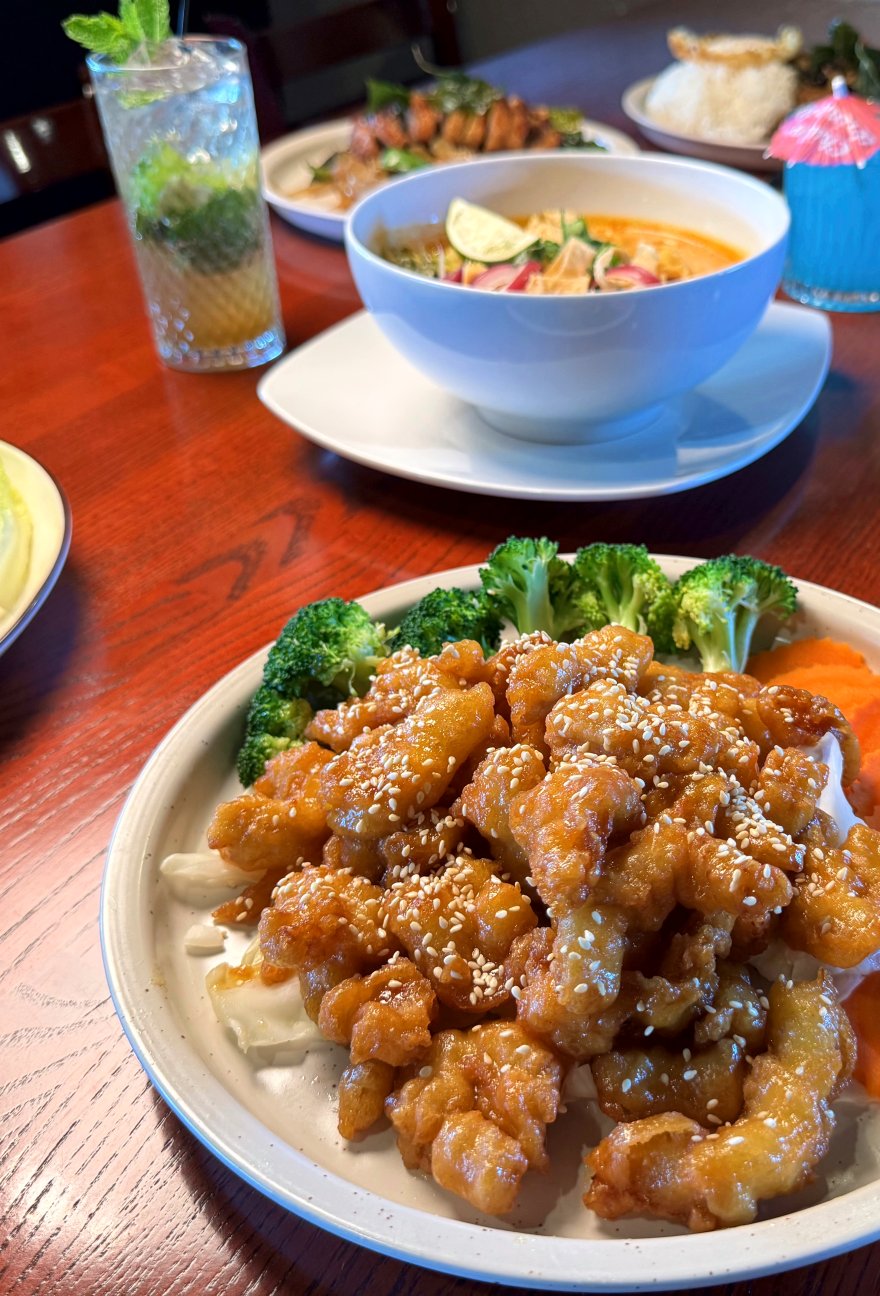
Few Thai dishes inspire the kind of instant craving that drunken noodles do. The moment the plate hits the table, you get the aroma first, sweet basil, hot chilies, garlic, soy, a little char from the wok. Then come the noodles themselves, broad and glossy, tangled with vegetables and protein, carrying just enough sauce to feel rich without turning heavy. A great Drunken Noodle has urgency to it. It tastes fast, hot, and alive.
If you have ever typed Drunken Noodles Near Me into your phone while hungry, you already know the results can be wildly uneven. One restaurant serves a smoky, spicy plate with fresh basil and proper wok hei. Another sends out a bland, oily tangle that tastes more like generic stir fry than a Thai staple. That gap matters, because drunken noodles are one of those dishes that reveal a kitchen’s skill almost immediately.
This is the dish often called pad kee mao, usually made with wide rice noodles, Thai basil, chili, garlic, soy-based seasoning, and a mix of vegetables and protein. Despite the name, there is typically no alcohol in it. The exact origin story varies depending on who tells it, but the common thread is that it is bold, spicy, and especially satisfying when cooked over fierce heat. Good versions feel loose and supple, not sticky. The sauce should coat, not drown. The basil should stay fragrant. The chilies should sharpen the whole plate rather than flatten it.
For Thai noodle lovers, finding the right spot is less about luck than about knowing what to look for.
What separates a good drunken noodle from a forgettable one
A lot of people judge drunken noodles by spice level alone. That is understandable, but incomplete. Heat is only one part of the equation. I have had mild versions that were deeply satisfying and extra-hot versions that tasted one-dimensional. The best plates balance several things at once.
The first is noodle texture. Wide rice noodles should be tender with a little chew, never mushy and never broken into short scraps. Fresh rice noodles, when handled well, have a soft resilience that dried noodles rarely match. If a restaurant uses fresh sheets and cooks them quickly over high heat, you can usually tell from the first bite.
The second is wok character. Drunken noodles should taste stir-fried, not steamed. That faint char, the slight caramelization where sauce catches the noodle edges, gives the dish its backbone. It is the difference between something lively and something limp. Restaurants with strong wok technique almost always produce better noodle dishes across the board.
Then there is basil, which gets overlooked more often than it should. Thai basil has a peppery, almost anise-like aroma that gives the dish its identity. If the kitchen swaps in generic sweet basil or uses too little, the result can still be edible, but it loses its personality. Fresh basil should announce itself, especially when the plate is hot.
Vegetables matter too. Bell peppers, onions, baby corn, green beans, broccoli, and carrots show up in different combinations depending on the restaurant. There is room for variation, but the vegetables should still feel crisp enough to contrast the noodles. Overcooked vegetables make the entire dish taste tired.
Sauce is where many places go wrong. Too little, and the noodles taste dry and underseasoned. Too much, and everything turns salty, sugary, or greasy. A strong Drunken Noodle carries depth from soy, oyster sauce or similar savory elements, garlic, chili, and wok heat, with enough moisture to cling and enough restraint to let the basil and noodles speak.
The best kinds of restaurants to trust with this dish
Not every Thai restaurant makes drunken noodles equally well, and not every noodle-focused place understands the dish beyond the menu name. If you are narrowing down options in your area, a few patterns tend to hold up.
Small independent Thai restaurants often do the best job because they treat pad kee mao as part of the kitchen’s regular rhythm, not an afterthought for delivery apps. These places usually move fast during lunch and dinner, which helps because noodles are at their best when the kitchen is constantly working the wok and cycling through fresh ingredients. Busy service can be a good sign here.
Restaurants with a shorter, more focused menu also tend to perform better than places trying to cover Thai, sushi, ramen, Chinese takeout, and bubble tea all at once. Breadth is not automatically a problem, but a kitchen stretched across too many cuisines usually loses precision. Drunken noodles need timing, heat, and attention. They do not benefit from an everything-for-everyone approach.
You should also pay attention to how a place handles other stir-fried noodle dishes. If their pad see ew, basil fried rice, and spicy noodle dishes are routinely praised for balance and heat, that is encouraging. A restaurant that understands the relationship between sauce, wok, and rice noodles usually gets Drunken Noodle right too.
When I am evaluating an unfamiliar Thai spot, I also look at whether the menu offers useful customization. Can you choose protein cleanly? Can you set spice levels? Do they mention Thai basil specifically? Small details like that suggest the dish is actually being cooked with intention rather than assembled from a generic stir-fry formula.
If you are searching “Drunken Noodles Near Me,” start with these signals
Most people find their next Thai meal through maps, delivery apps, or local review sites. That is practical, but digital listings can blur the difference between average and excellent. You need better filters than a star rating alone.
Here are the strongest signs that a nearby place is worth trying:
- Reviews mention smoky flavor, basil aroma, or “wok hei” rather than only portion size.
- Customer photos show wide noodles that look glossy and distinct, not chopped up or swimming in sauce.
- The menu offers spice customization and a clear choice of proteins.
- The restaurant specializes in Thai food rather than splitting focus across multiple unrelated cuisines.
- Recent reviews, not old ones, consistently praise noodle dishes.
Those clues are not foolproof, but they beat relying on pretty menu photos. A lot of restaurants photograph noodles under ideal conditions and then send out something very different on a busy Friday night. Real diner photos are often more useful precisely because they are https://cristianhtdr278.lowescouponn.com/drunken-noodle-near-me-top-thai-restaurants-to-try-right-now less polished.
One practical tip from experience: check reviews for both dine-in and delivery comments. Some restaurants make outstanding drunken noodles in-house but struggle with takeout packaging. Others are built for volume and travel surprisingly well. If you are ordering from home, that difference can decide whether your dinner arrives silky or glued together.
The protein choice changes the whole dish
The same restaurant can produce a very different Drunken Noodle depending on what protein you order. This is not just preference, it affects moisture, texture, and how the sauce behaves.
Chicken is the safest benchmark. It takes flavor well, stays relatively neutral, and tells you whether the kitchen can balance sauce and noodles without leaning on richer meat. If I am trying a place for the first time, chicken is often the smartest first order because it gives the clearest read on the restaurant’s fundamentals.
Beef can be excellent, especially in a slightly more savory, darker version of the dish. The downside is that some kitchens overcook it or slice it too thick, which interrupts the flow of the noodles. When done right, beef adds heft and pairs well with stronger char.
Shrimp works best when the kitchen respects timing. Overcooked shrimp turns rubbery fast, and because drunken noodles are all about speed, the margin for error is small. A restaurant that nails shrimp in this dish usually has solid wok discipline.
Tofu is where weaker restaurants get exposed. Good tofu should absorb flavor and offer some contrast, either gently crisped on the edges or at least firm enough not to disappear into the noodles. Poor tofu versions often taste like an afterthought. Great ones can be some of the most satisfying, especially when the basil and chili come through cleanly.
Seafood mixed versions can be delicious, but I would not make them your first order from a new place. There are simply more variables, and the dish can turn watery if the kitchen is not careful.
Spice level is not just about courage
Many diners approach Drunken Noodle as a test of heat tolerance. That can be fun, but it sometimes leads to bad ordering decisions. The point is not to prove something. The point is to get a balanced plate.
If a restaurant offers spice levels from mild to Thai hot, medium or medium-hot is usually the best starting place unless you already know the kitchen. Some restaurants label heat conservatively, others do not play around. I have ordered “medium” at one neighborhood Thai place and gotten a pleasant glow, then ordered the same level elsewhere and spent the meal alternating bites with iced tea.
Extra heat can also obscure what makes the dish appealing in the first place. Once the chili load gets too high, you lose the basil, the garlic, and the subtle char in the noodles. That is fine if your only goal is heat, but if you care about flavor, there is a sweet spot.
A useful move is to ask for medium-hot and request chili on the side if possible. That gives you control without forcing the kitchen into an all-or-nothing choice. It also helps if you are ordering delivery, because spice tends to feel a little flatter after transport.
Dine-in usually wins, but delivery can still be very good
Drunken noodles are one of those dishes that reveal the gap between restaurant service and takeout more than people expect. Straight from the wok, they have steam, looseness, and aroma working in their favor. After twenty or thirty minutes in a container, the noodles can clump and the basil loses some brightness.
That does not mean you should avoid ordering them for delivery. It just means you should be selective. Some restaurants pack sauce and noodles with enough restraint that the dish arrives in strong shape. Others over-sauce intentionally to compensate for travel, and the result ends up heavy.
If I really want to judge a new Thai place on its Drunken Noodle, I prefer to eat it in the restaurant at least once. You get the dish at its best temperature and texture, and you can tell whether the kitchen actually knows how to use the wok. After that, if the place proves reliable, ordering from home becomes much easier.
There are a few practical habits that improve delivery results. Eat it soon after it arrives. Transfer it from the container if it looks compressed. A quick toss with chopsticks or a fork can loosen the noodles before they set into a single block. If the restaurant sent lime or extra chili, use them. A small finishing adjustment can wake the dish back up.
Regional style and house style both matter
There is no single universal Drunken Noodle. Some kitchens push sweetness a little more. Some lean into soy depth. Some use more vegetables, while others keep the plate noodle-heavy. One restaurant may give you a fiery basil-forward version with lots of fresh chili, while another emphasizes savory richness and char.
This variation is part of the dish’s appeal. It is also why people sometimes argue about what the “best” version should be. In reality, there is room for different interpretations as long as the essentials remain intact: wide rice noodles, assertive seasoning, aromatic basil, and enough wok energy to keep the dish moving.
That said, certain shortcuts are easy to spot. If the noodles are generic flat pasta standing in for rice noodles, if the basil is barely present, or if the dish tastes like standard brown sauce from a takeout steam table, it has drifted too far from what Thai noodle lovers are usually hoping for.
A restaurant’s house style can become a real advantage when it has confidence. I know diners who swear by a drier, smokier Drunken Noodle with less sauce and more char. Others want a saucier plate with extra vegetables and a softer chew. The key is consistency. Once you find a place whose version suits your taste, it becomes the kind of order you think about all week.
What to order alongside it, and what not to
Drunken noodles are rich enough to carry a meal on their own, but the right supporting order can sharpen the experience. A crisp papaya salad, when the restaurant does it well, adds acid and crunch that cut through the noodles beautifully. Fresh spring rolls can work too, especially if you want something cool before the heat lands. Thai iced tea is a classic for a reason, although it can be sweet enough to overwhelm if the dish itself leans sweet.
I would be more careful with sides that duplicate the same flavors or textures. Ordering fried rice, another heavy noodle dish, and Drunken Noodle all at once often leaves the table with too much starch and not enough contrast. If you are sharing, aim for one vibrant dish, one rich dish, and something crisp or brothy to reset the palate.
For anyone trying a restaurant for the first time, there is another smart move: pair the Drunken Noodle with one simpler benchmark, maybe a green curry or pad see ew. That gives you a broader sense of the kitchen without drowning the meal in variety. You can usually tell a lot from how a restaurant handles both a stir-fried noodle and a sauced curry.
Common disappointments, and how to avoid them
Certain problems come up again and again when people complain that their local drunken noodles were just okay. The noodles are broken or overcooked. The dish is too sweet. The spice is all heat and no flavor. The vegetables are watery. The basil is barely there. Most of these issues are visible before you even take a bite, which means photos and review language matter more than many people realize.
These are the mistakes worth watching for when choosing a place:
- Noodles that look cut into short pieces or fused into one sticky mass.
- Excessively dark sauce coating everything like gravy.
- Sparse basil or no visible herbs at all.
- Vegetables cooked past the point of texture.
- Reviews that praise huge portions but say little about flavor.
Large portions can be nice, of course, but they should not distract from execution. A massive tray of mediocre noodles is still mediocre noodles. In practice, I would take a slightly smaller plate with better wok heat and fresher basil every time.
Another overlooked issue is timing during rush hours. Some restaurants that perform well on weekday lunches fall apart on Saturday evenings when ticket times stretch and wok stations get overloaded. If you are testing a new spot, a non-peak order can give you a fairer baseline.
The best recommendation is often the place that gets the basics right every time
People love the hunt for a hidden gem, and sometimes that is exactly what you find. A tiny family-run Thai restaurant in a strip mall can absolutely turn out the best Drunken Noodle in town. But reliability matters just as much as discovery. For regular cravings, the best nearby restaurant is usually the one that repeats its strengths consistently.
That means noodles with proper chew every visit. Sauce that stays balanced. Basil that tastes fresh. Protein cooked correctly. Heat level that matches what you asked for. Those are not flashy qualities, but they are what keep a dish from disappointing you after the third or fourth order.
If you are still sorting through your local options, treat your search like a short tasting project rather than a one-time gamble. Try two or three promising Thai spots within a couple of weeks. Order the same protein and similar spice level each time. Eat at least one order in-house. Notice the noodles first, then the basil, then the sauce. Very quickly, one restaurant will separate itself from the rest.
And when that happens, the next time you search Drunken Noodles Near Me, you will not really be searching at all. You will be confirming what you already know, which kitchen understands the dish, which one sends out a true Drunken Noodle, and which one is worth the trip when only spicy Thai noodles will do.
Nakhon Luang Thai Kitchen
Address: 805 Village Center Dr, Colorado Springs, CO 80919
Phone number: +17195315175
FAQ About Drunken Noodles Near Me
What makes it drunken noodles?
Drunken noodles, or Pad Kee Mao, get their name from the Thai word khi mao (meaning "drunkard"). They contain no alcohol. The name comes from the idea that the dish is a popular late-night meal to cure a hangover or a great food to eat with a cold beer.
What is the difference between pad see ew and drunken noodles?
While both Pad See Ew and Drunken Noodles use the same wide rice noodles, Pad See Ew is a mild, sweet-savory dish made with dark soy sauce and Chinese broccoli, whereas Drunken Noodles (Pad Kee Mao) are fiery, garlicky, and herbaceous with fresh chilies and Thai basil.
What are traditional drunken noodles?
Traditional drunken noodles, known as Pad Kee Mao in Thai, are a fiery, savory street food stir-fry made with wide flat rice noodles, fresh garlic, lots of hot chilies, meat or tofu, and fragrant holy basil. Despite the name, they contain no alcohol; the dish is traditionally eaten late at night or as a hangover cure because the intense spice helps clear the head.